
Amorphous Metal Products

Advanced Amorphous Metal & Bulk Metallic Glass Solutions

Amorphous alloys, also known as liquid metals or metallic glasses, represent a disruptive class of advanced metallic materials. By breaking away from the ordered atomic arrangement of conventional crystalline metals, amorphous metals deliver exceptional strength, hardness, elasticity and precision performance for high-end manufacturing.

Bulk Metallic Glass Amorphous Alloy Metallic Glass Liquid Metal
BMG
Centimeter-level Bulk Amorphous Alloy Products
Larger and thicker amorphous metal products require more advanced manufacturing capability, reflecting the level of technological advancement.
Advanced Materials

Amorphous Alloy(Metallic Glass)

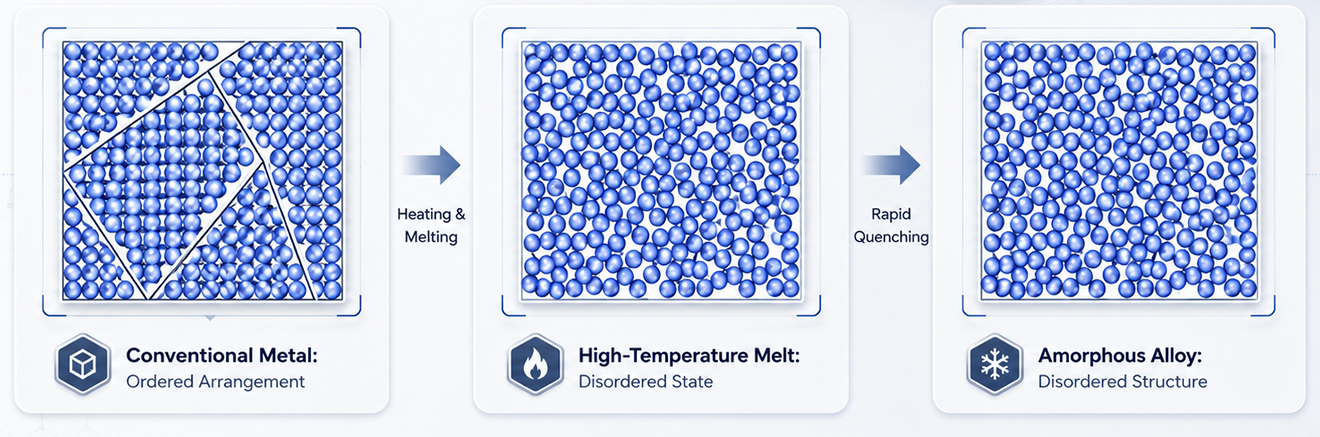
Amorphous alloy, also known as metallic glass, is a disruptive new class of metal material. By breaking away from the ordered atomic arrangement of traditional metals and adopting a disordered atomic structure, it achieves performance breakthroughs that conventional metals often struggle to reach, bringing material innovation to high-end manufacturing.

Advanced materials diagram showing conventional metal, high-temperature melt and amorphous alloy atomic structures

Amorphous alloy can also be described as a frozen metallic melt. As products become larger and thicker, the manufacturing difficulty rises exponentially,reflecting the level of technical capability.

Structure Comparison

Comparison of traditional metals and amorphous metals

Disordered atomic wonders, commonly known as "liquid metals," have a disordered atomic structure. Unlike traditional crystalline metals, rapid cooling "freezes" the molten alloy by using ultra-high-speed cooling (10^6°C/s), which prevent the atoms from crystallizing and preserve the disordered liquid structure.

Traditional Metals

Ordered grains and grain boundaries

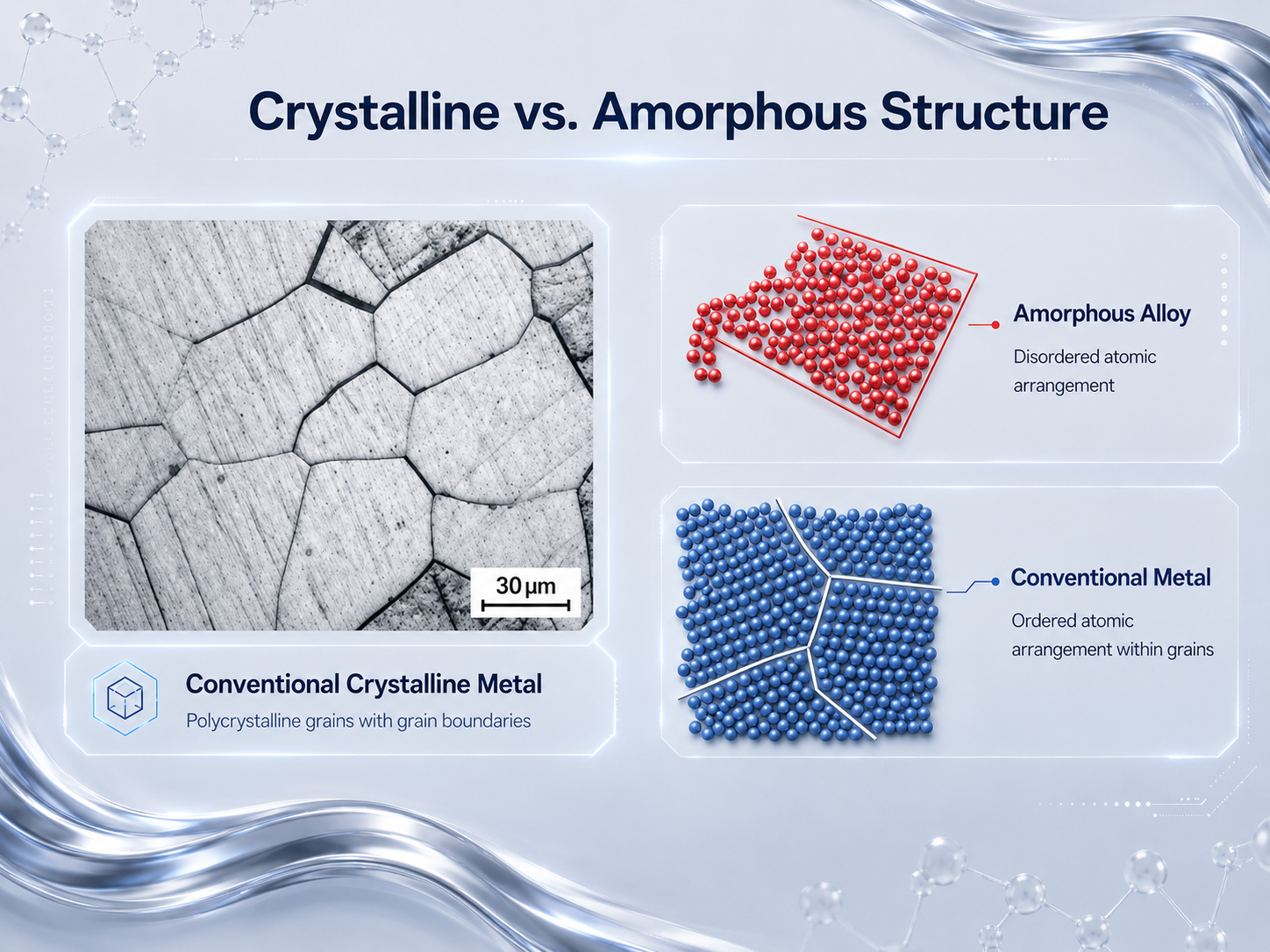
Traditional metals are crystalline aggregates consisting of ordered grains and grain boundaries.
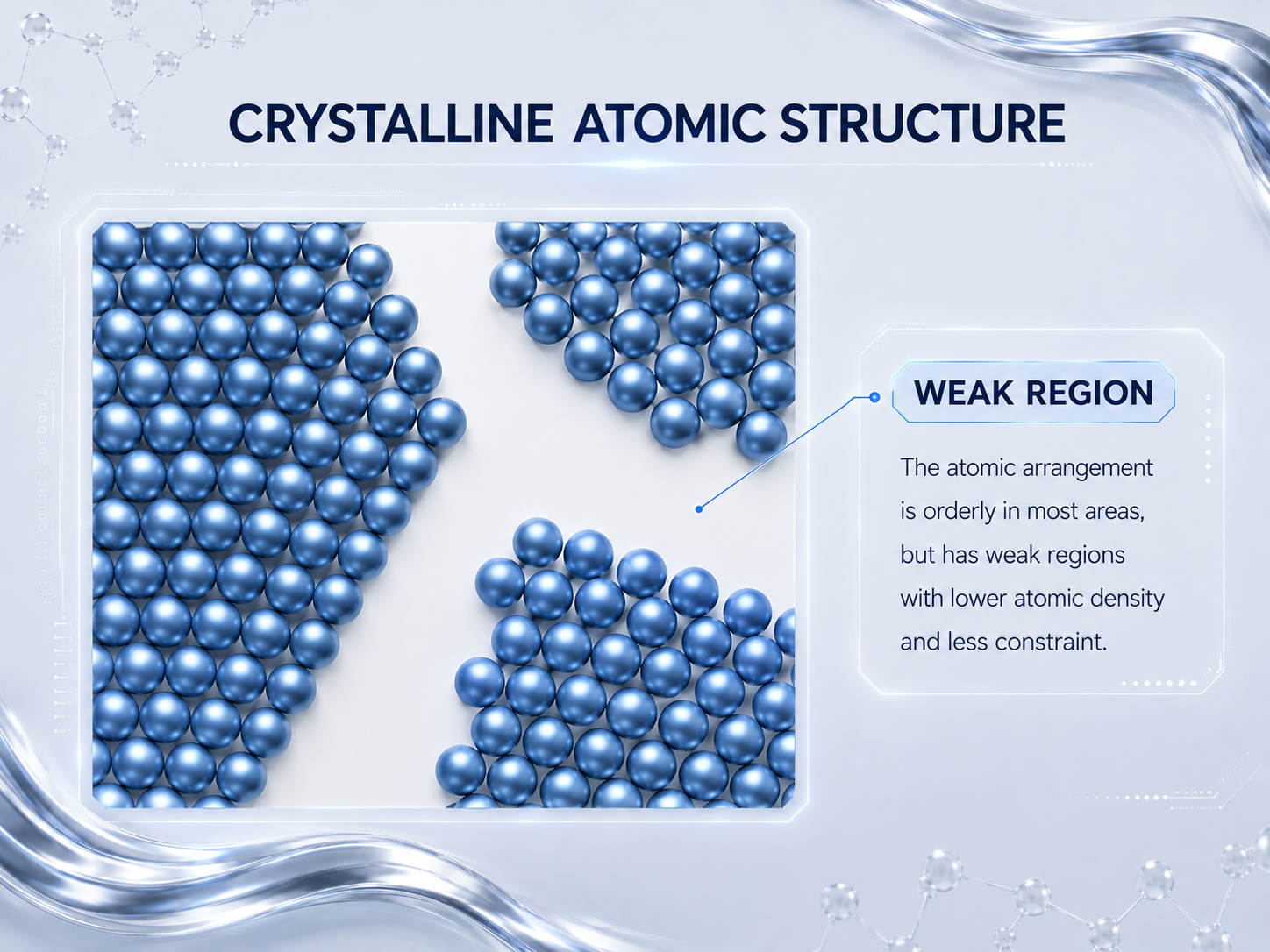
Slow cooling (equilibrium solidification) allows atoms to fully arrange themselves into a crystal lattice and forms grains. These structures often result in weak regions at the boundaries of the crystal geometry, which are commonly referred to as grain boundaries.

Crystalline vs amorphous structure comparison showing conventional crystalline metal and amorphous alloy
Crystalline atomic structure showing ordered grains and weak regions
Amorphous Metals

Disordered atomic continuum without grain boundaries

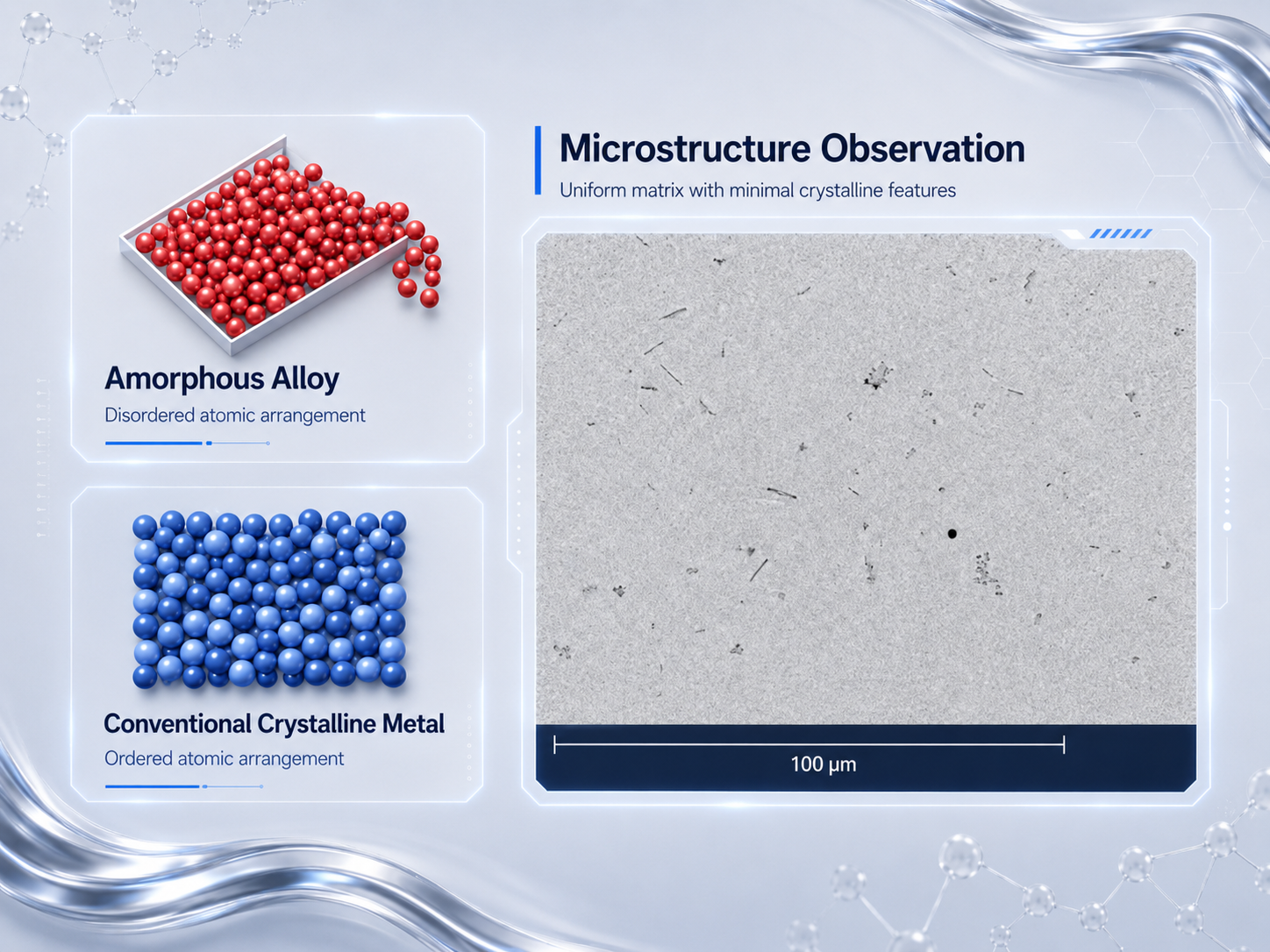
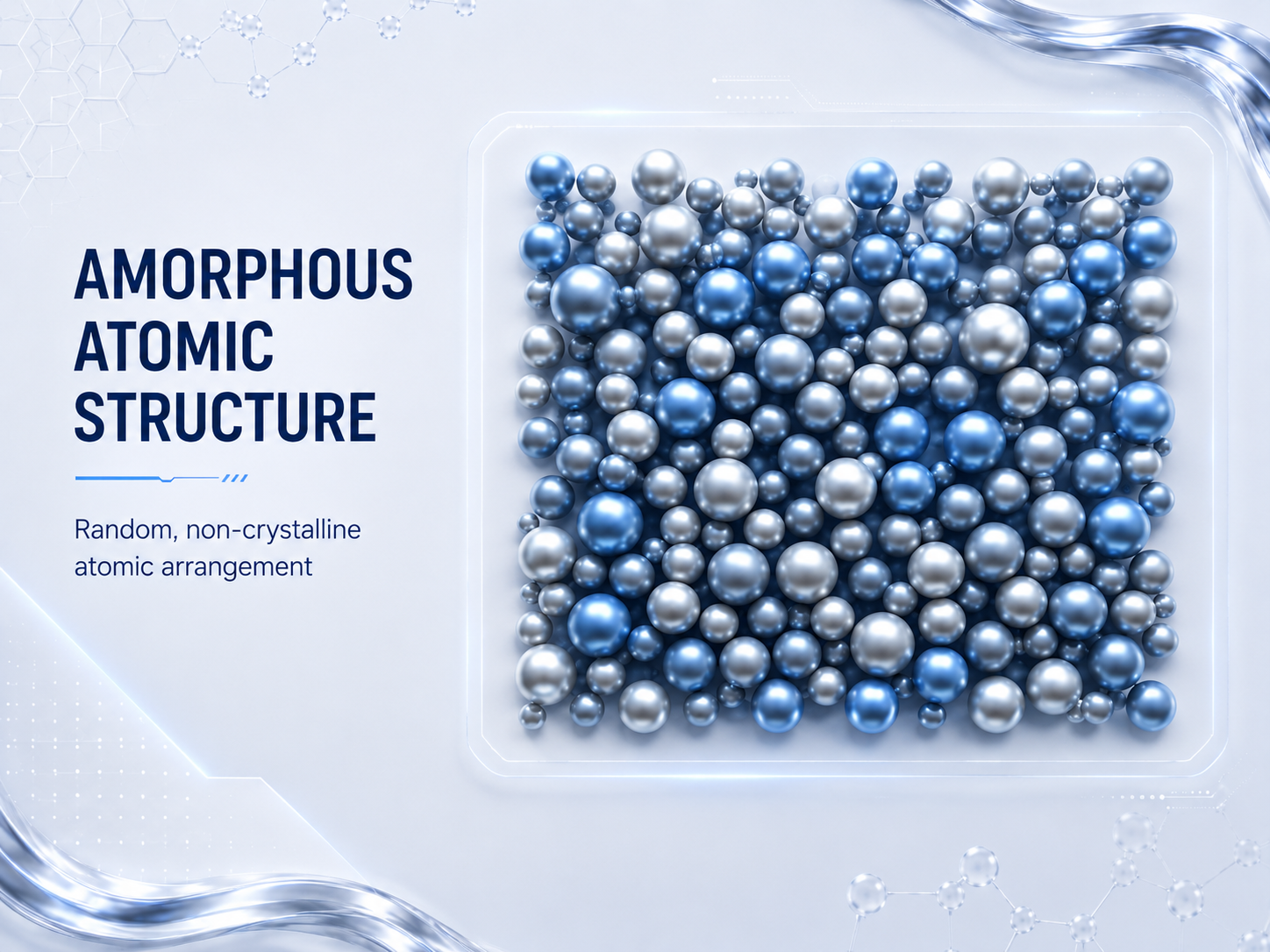
Amorphous metals are a disordered atomic continuum that is "without grains or grain boundaries".
Atoms are frozen before they can arrange themselves, preserving the disordered liquid structure. The structure is continuous and homogeneous. In addition to high strength, amorphous metal parts also have a very high elastic strain limit compared to traditional alloys. Structural differences determine the unique properties of amorphous metals, such as ultra-high strength, high elasticity, corrosion resistance, and good soft magnetism.

Microstructure observation comparing amorphous alloy and conventional crystalline metal
Amorphous atomic structure showing random non-crystalline atomic arrangement
Structure Comparison

Traditional Metals vs. Amorphous Metals

Disordered atomic wonders, commonly known as “liquid metals,” have a disordered atomic structure. Unlike traditional crystalline metals, rapid cooling freezes the molten alloy using ultra-high-speed cooling, preventing atoms from crystallizing and preserving the disordered liquid structure.

Amorphous Metal Products for Advanced Manufacturing

Amorphous metals, also called metallic glasses, are used in advanced manufacturing where conventional crystalline metals may struggle to achieve the required combination of strength, elasticity, corrosion resistance and dimensional precision. Because amorphous alloys do not contain traditional grain boundaries, they can provide excellent mechanical performance and surface quality for demanding applications.

AmorCore Technologies focuses on amorphous metal products, bulk metallic glass materials and high-performance rare metal material solutions for industries including high-end electronics, medical devices, robotics, aerospace and precision component manufacturing.